
Heating costs in New Hampshire have been a persistent source of financial pressure for homeowners, and pellet stoves have emerged as one of the most practical solutions — and a key component of any winter emergency kit for your home. A quality pellet stove can heat a large living area for a fraction of the cost of oil, propane, or electric heat, and modern models are efficient enough to serve as a primary heat source for many homes.
Unlike traditional wood stoves, pellet stoves burn compressed wood pellets fed automatically from a hopper, which means consistent heat output without the constant tending that a wood fire requires. You fill the hopper, set your desired temperature, and the stove manages itself — sometimes for 24 hours or more before needing a refill.
For New England homeowners looking to reduce heating bills or add a reliable backup heat source, pellet stoves offer an appealing combination of efficiency, convenience, and cost savings. Check out our Tech section for more product guides tailored to New Hampshire homeowners.
Why Pellet Stoves Make Sense in New Hampshire
Wood pellets are widely available across the state, with most home improvement stores and many local suppliers stocking them from fall through spring. A ton of pellets — roughly 50 forty-pound bags — typically costs between $250 and $350 and provides roughly the same heat as 120 gallons of heating oil or 170 gallons of propane, at significantly lower cost.
The math is straightforward. An average New Hampshire home using pellets as a primary heat source might burn three to five tons per season, costing roughly $750 to $1,750 depending on pellet prices and the severity of the winter. Compare that to $2,500 to $4,500 for oil heat or $3,000 to $5,000 for propane, and the savings are substantial.
Pellet stoves also produce far less creosote than traditional wood stoves, which means less chimney maintenance and reduced fire risk. They burn cleaner, meet EPA emissions standards, and many models qualify for state and federal tax incentives that further reduce the effective cost.
Best Overall: Harman Absolute43
Harman has built its reputation on pellet stoves that combine serious heating capability with the kind of set-it-and-forget-it convenience that makes them practical for daily use. The Absolute43 is the company’s most popular model and earns its place at the top of most recommendation lists.
The stove produces up to 43,000 BTUs, which is enough to heat 1,500 to 2,500 square feet depending on your home’s insulation and layout. Harman’s ESP (Exhaust Sensing Probe) technology continuously monitors combustion conditions and adjusts the fuel feed, air supply, and exhaust to maintain optimal efficiency. In practical terms, this means the stove adapts to different pellet brands and qualities without requiring manual adjustment.
The hopper holds 42 pounds of pellets, which provides roughly 24 hours of burn time on a low to medium setting. The stove’s large viewing window with a ceramic glass door gives you the visual warmth of a real fire, and the cast iron construction radiates heat even after the fire dies down.
Harman stoves are more expensive than most competitors, but they are built in Pennsylvania, carry a strong warranty, and have a dealer and service network that matters when you need parts or maintenance. For a stove that will serve as a primary heat source through New Hampshire winters, the reliability justifies the investment.
Best Value: Castle Serenity
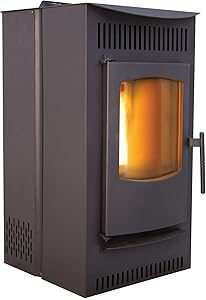
If you want to experience pellet heat without a four-figure investment, the Castle Serenity is the entry point that most budget-conscious buyers should consider. At a street price typically under $1,200, it is one of the least expensive pellet stoves that still delivers reliable daily performance.
The Serenity produces up to 31,960 BTUs, enough to heat roughly 1,500 square feet. Its small footprint — about 22 inches wide and 24 inches deep — makes it suitable for rooms where a full-size pellet stove would dominate the space. The 40-pound hopper gives you a full day of burn time on lower settings.
Where the Castle trades off against premium models is in features and refinement. The controls are simpler, the combustion management is less sophisticated, and you may need to experiment with air settings when switching between pellet brands. But the core function — turning wood pellets into consistent, affordable heat — works well, and the stove has developed a loyal following among homeowners who value straightforward performance over bells and whistles.
The Serenity ships directly to your home and can be installed by a competent homeowner with basic tools, though professional installation is recommended for the venting system.
Best Pellet Stove Insert: Comfortbilt HP22i
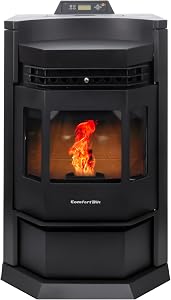
Many New Hampshire homes have existing fireplaces that look charming but are terribly inefficient as heat sources — a traditional open fireplace actually loses more heat up the chimney than it produces in the room. A pellet stove insert transforms that decorative liability into a genuine heating appliance.
The Comfortbilt HP22i is purpose-built to slide into a standard fireplace opening, using the existing chimney with a stainless steel liner for venting. It produces up to 50,000 BTUs, making it one of the most powerful inserts available, and the 55-pound hopper provides extended burn times that minimize the frequency of refills.
The HP22i includes a programmable thermostat, a carbon steel heat exchanger for efficient heat transfer, and a large ash pan that reduces cleaning frequency. The blower distributes heat into the room rather than letting it radiate slowly from the insert face, which makes a noticeable difference in how quickly and evenly the room warms.
For homes with an unused or inefficient fireplace, an insert is often the most cost-effective path to pellet heat because the venting infrastructure largely already exists. The visual effect is also appealing — you get the look of a fireplace fire with the efficiency and convenience of a pellet stove.
Best for Large Spaces: US Stove 5660

Heating an open floor plan, a large basement, or a workshop requires more BTU output than a standard pellet stove provides. The US Stove 5660 delivers up to 60,000 BTUs, putting it in a class of output that can handle spaces of 2,200 square feet or more.
The large 60-pound hopper extends burn time significantly — up to 36 hours on lower settings — which is a meaningful convenience advantage when you are heating a space around the clock during a New Hampshire January. The stove features automatic ignition, an adjustable heat output, and a large ash drawer for easier maintenance.
The 5660 is also one of the heavier-duty options available, with a solid steel construction that handles the thermal cycling of heavy daily use without warping or degrading. For homeowners who plan to run their pellet stove as a primary heat source through six months of winter, that durability matters more than it might seem when comparing spec sheets.
Best Small Pellet Stove: Cleveland Iron Works PS20W-CIW
Not every space needs a furnace-level pellet stove. Bedrooms, home offices, additions, and small cabins often need supplemental heat that a full-size stove would provide in uncomfortable excess. The Cleveland Iron Works PS20W-CIW is designed specifically for these applications.
The compact unit produces up to 25,000 BTUs — enough to heat roughly 800 to 1,000 square feet — and its small footprint tucks into a corner without dominating the room. The 18-pound hopper is smaller than full-size models, but adequate for supplemental use where you are not running the stove 24 hours a day. The Wi-Fi connectivity works best with a strong whole-home signal — if your coverage is spotty, our guide to the best mesh WiFi systems can help solve that.
The PS20W includes Wi-Fi connectivity, which is a surprising feature at this price point. You can adjust temperature, monitor the hopper level, and set schedules from your phone. For a bedroom or office where you want warmth during specific hours without heating the space all day, that programmability is genuinely useful.
Pellet Quality Matters
The quality of pellets you burn has a direct impact on stove performance, maintenance frequency, and overall cost per BTU. Premium-grade pellets — look for PFI (Pellet Fuels Institute) certification — contain less moisture, less ash, and more consistent heat content than economy brands.
Cheap pellets save money per bag but produce more ash, create more clinkers that can jam the burn pot, and deliver less heat per pound. Over a season, the extra maintenance and reduced efficiency often offset the per-bag savings. For a primary heat source in a New Hampshire winter, the premium pellets are worth the incremental cost.
Buying pellets by the ton in early fall — before demand peaks — typically saves 15 to 20 percent compared to buying individual bags in January. Many New Hampshire suppliers offer pallet delivery, which is the most economical approach if you have garage or basement storage space. The Pellet Fuels Institute maintains a directory of certified pellet brands and suppliers.
Installation and Venting
Pellet stoves require proper venting, which is simpler than a traditional wood stove chimney but still needs to be done correctly. Most pellet stoves vent through a small-diameter pipe (typically 3 or 4 inches) that can exit through an exterior wall rather than through the roof, reducing installation complexity and cost.
Professional installation typically costs $300 to $800 depending on the venting path and local labor rates. A direct vent through an exterior wall is the simplest and least expensive option. If you need to run the vent pipe vertically or through multiple floors, costs increase accordingly.
In New Hampshire, pellet stove installations must comply with NFPA 211 clearance requirements and local building codes. Most towns require a building permit for new stove installations. Having a certified installer handle the work ensures code compliance and protects your homeowner’s insurance coverage. Keep in mind that most pellet stoves require electricity to run their auger and blower — pairing one with a portable power station or whole house generator ensures your heat stays on even during grid outages.
How much does it cost to heat with a pellet stove in New Hampshire?
Most New Hampshire homeowners using a pellet stove as a primary heat source burn 3-5 tons of pellets per season at a cost of $750-$1,750, depending on pellet prices and winter severity. This compares favorably to $2,500-$4,500 for oil heat or $3,000-$5,000 for propane. Buying pellets by the ton in early fall offers the best pricing.
Can a pellet stove heat a whole house?
A high-output pellet stove (40,000+ BTUs) can heat 1,500-2,500 square feet effectively in a well-insulated home with open floor plans or good air circulation. For multi-story homes or homes with compartmentalized layouts, a pellet stove works best as the primary heat source for the main living area with supplemental heat in bedrooms and distant rooms. Many New Hampshire homeowners use a pellet stove to offset 60-80% of their total heating costs.
How often do you need to clean a pellet stove?
Empty the ash pan every 2-3 days during heavy use, and clean the burn pot and heat exchanger weekly. A thorough cleaning — including the exhaust vent and blower — should be done monthly during heating season and before the stove is used each fall. Using premium-grade pellets reduces ash buildup and extends the interval between cleanings.


