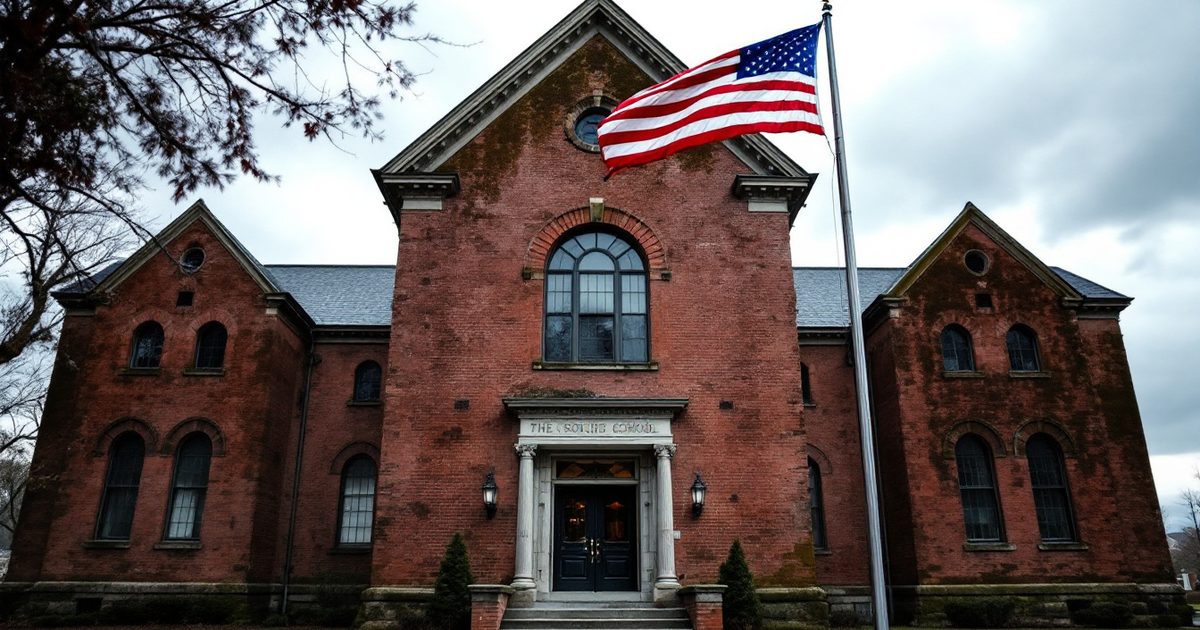
Southern New Hampshire University started as a small accounting school in Manchester in 1932. Today it is one of the largest universities in the United States, enrolling more than 200,000 students — the vast majority of them online. That transformation, driven largely by former president Paul LeBlanc over two decades of aggressive expansion, has made SNHU one of the most recognized names in online higher education.
But recognition is not the same as reputation, and size is not the same as quality. Prospective students considering SNHU’s online programs deserve a clear-eyed look at what the university offers, what it costs, and whether the investment produces meaningful returns.
What SNHU Offers
SNHU’s online division offers more than 200 degree programs spanning certificates, associate degrees, bachelor’s degrees, master’s degrees, and doctoral programs. The most popular programs include business administration, psychology, criminal justice, nursing (RN-to-BSN), information technology, and marketing.
The university is regionally accredited by the New England Commission of Higher Education (NECHE), the same accrediting body that oversees Dartmouth, UNH, and other traditional New England institutions. This is a critical distinction — regional accreditation is the gold standard, and it means SNHU credits transfer to other regionally accredited schools (though individual transfer policies vary).
Several SNHU programs hold additional specialized accreditations. The business programs are accredited by the Accreditation Council for Business Schools and Programs (ACBSP), and the nursing program holds accreditation from the Commission on Collegiate Nursing Education (CCNE).
What It Costs
SNHU’s online tuition is its most compelling selling point. As of the 2025-2026 academic year:
- Online undergraduate tuition: $330 per credit hour
- Online graduate tuition: $627 per credit hour
- Active-duty military tuition: $225 per credit hour (undergraduate)
A full 120-credit bachelor’s degree at $330 per credit comes to $39,600 before financial aid — significantly less than most private universities and competitive with many public institutions’ out-of-state rates. Transfer credits can reduce this substantially. SNHU accepts up to 90 transfer credits toward a bachelor’s degree, meaning a student with an associate degree could complete a bachelor’s for roughly $10,000 to $13,000.
There are no additional fees for technology, student activities, or library access — costs that often surprise students at other institutions. Books and materials vary by program but are increasingly covered through digital-first course materials included in tuition.
Financial aid is available. SNHU participates in federal financial aid programs, and most online students qualify for some form of assistance. The university’s net price calculator provides personalized estimates.
The Student Experience
SNHU’s online courses run in accelerated 8-week terms, with six terms per year. Students typically take one or two courses per term. This format allows working adults to maintain employment while making steady progress toward a degree — a key part of SNHU’s appeal.
Coursework is asynchronous, meaning there are no required login times or live lectures. Students access materials, complete assignments, and participate in discussion boards on their own schedule within weekly deadlines. Each course is led by an instructor who provides feedback and grades assignments, though the degree of personalized interaction varies.
The university assigns each student an academic advisor who serves as a consistent point of contact throughout their enrollment. Reviews of the advising experience are mixed. Some students report responsive, helpful advisors who proactively check in. Others describe a more transactional relationship, with advisors who are primarily focused on enrollment and registration rather than academic guidance.
Student support services include online tutoring, a writing center, career services, and a digital library. The Shapiro Library provides access to databases, journals, and research support that compares favorably with many traditional institutions.
Academic Rigor: The Honest Assessment
This is where opinions diverge most sharply. SNHU’s online programs are designed for accessibility, which means they are structured to be completable by working adults who may have been out of school for years. Course materials are clearly organized, expectations are spelled out in detail, and grading rubrics leave little ambiguity about what is required.
For highly motivated students, this structure can feel limiting. The discussion board format — where students are typically required to post an initial response and reply to two classmates — is widely criticized as formulaic. The depth of engagement depends heavily on the instructor and the specific course.
Graduate programs generally demand more. The MBA program, for instance, includes case studies, capstone projects, and more rigorous analytical work. But even at the graduate level, SNHU is not trying to compete with highly selective MBA programs — it is serving a different market.
What SNHU does well is deliver a structured, consistent educational experience at scale. Students know exactly what is expected, deadlines are clear, and the path to completion is well-defined. For adults returning to education after years in the workforce, that predictability has genuine value.
Employer Perception
The practical question for most prospective students is whether employers respect an SNHU degree. The answer depends on the field and the employer.
For career advancement within an existing field — particularly in business, healthcare administration, IT, and education — an SNHU degree generally meets the credential requirements that employers set. Many large employers, including several in New Hampshire, have tuition assistance partnerships with SNHU that implicitly endorse its programs.
For competitive entry-level positions at selective employers, an SNHU degree may carry less weight than a degree from a more traditionally prestigious institution. This is true of most large online programs, not just SNHU.
The Bureau of Labor Statistics data on earnings by educational attainment consistently shows that a bachelor’s degree from any accredited institution substantially improves lifetime earning potential compared to a high school diploma alone. For students whose alternative is no degree at all, the value proposition is strong.
The New Hampshire Connection
SNHU maintains a traditional campus in Manchester with roughly 3,000 on-campus students, Division II athletics, and a campus experience that bears little resemblance to the online operation. The university is one of the largest employers in Manchester and has invested heavily in the city’s Millyard district.
For New Hampshire residents, SNHU’s presence offers some advantages. The university partners with state employers and community colleges on transfer agreements. Granite State College, now part of the University System of New Hampshire, offers an alternative for Granite State residents who prefer a public institution, but SNHU’s program breadth and marketing reach are substantially larger.
The state’s broader education landscape faces real challenges, as our reporting on education system strain and teacher pay has documented. SNHU’s growth represents one response to the demand for affordable, flexible higher education — even if traditional academics view that growth with some skepticism.
The Bottom Line
SNHU is not the right fit for everyone. Students seeking a traditional college experience, small seminar-style classes, or the prestige of a selective institution should look elsewhere. The online format requires self-discipline, and the discussion-board-heavy pedagogy will not satisfy everyone.
But for working adults who need an accredited degree at a manageable price, on a flexible schedule, with a clear path to completion, SNHU delivers on its core promise. The tuition is genuinely affordable by current standards. The accreditation is legitimate. The programs are structured for completion rather than attrition. And the degree will check the credential box for most employers.
The decision comes down to what you need the degree to do. If the answer is “qualify me for a promotion” or “meet the requirements for a career change,” SNHU is a reasonable investment. If the answer is “provide a transformative intellectual experience,” you may want to look at other options.
Is SNHU a legitimate accredited university?
Yes. Southern New Hampshire University is regionally accredited by the New England Commission of Higher Education (NECHE), the same body that accredits Dartmouth College, the University of New Hampshire, and other established institutions. Regional accreditation is the highest level of institutional accreditation in the United States and ensures that credits are widely transferable.
How long does it take to complete an online degree at SNHU?
A bachelor’s degree typically takes about four years for students without transfer credits, though SNHU’s accelerated 8-week terms allow faster completion for students who take a heavier course load. Students transferring in an associate degree or significant prior credits can often finish in 1.5 to 2 years. Master’s degrees generally take 1 to 2 years depending on the program and course load.
Can I transfer credits from SNHU to another university?
SNHU’s regional accreditation means its credits are generally accepted by other regionally accredited institutions. However, each receiving institution sets its own transfer policies, and acceptance of specific courses is never guaranteed. Contact the admissions office of the institution you plan to transfer to for specific guidance before enrolling.


