A team of New Hampshire National Guard medical personnel recently traded the granite hills of home for a chain of volcanic islands off the western coast of Africa, carrying out a three-day aeromedical exchange with military and health partners in Cabo Verde. The collaboration, held in the capital city of Praia from May 20 to 22, showcased a quieter but increasingly important dimension of the Guard’s mission: building enduring relationships with allies abroad while sharpening the lifesaving skills of its own soldiers and airmen. According to the National Guard, the exchange focused on en route patient care, triage, prolonged field care, and medical readiness in an archipelagic environment.
For New Hampshire residents, the trip is a reminder that the state’s Guard does far more than respond to floods, snowstorms, and local emergencies. Its members are part of a global network of partnerships, and the medical knowledge they refine in places like Cabo Verde is the same expertise they bring home to serve their communities and fellow veterans.
What the exchange involved
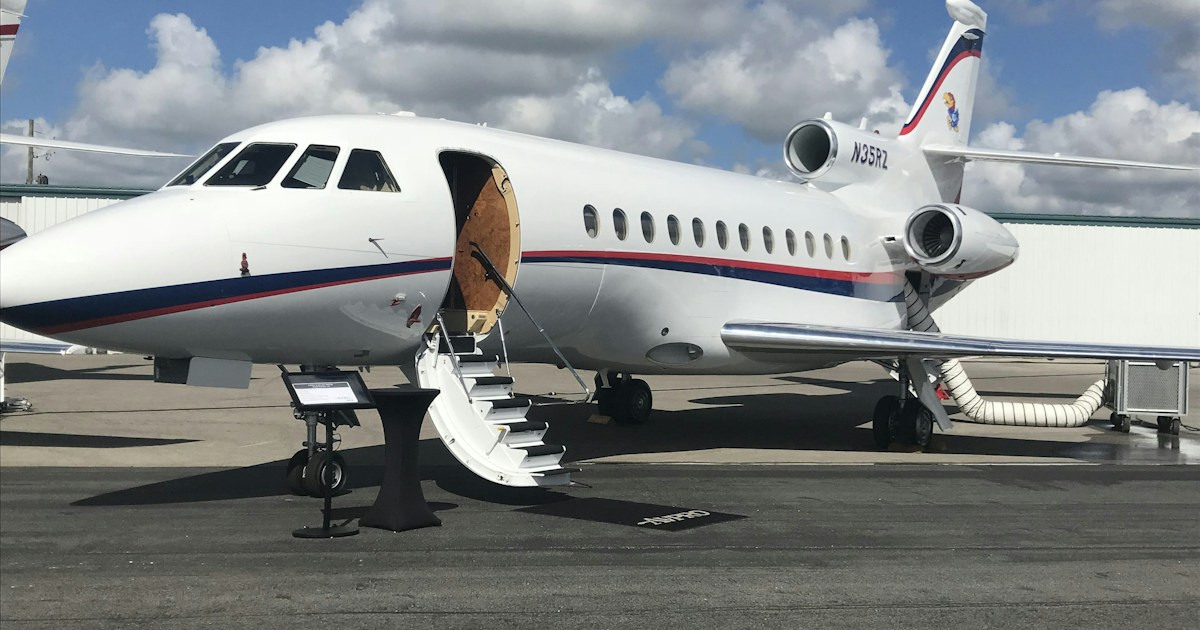
The three-day collaboration paired the New Hampshire team with the Cabo Verde Armed Forces Medical Unit and personnel from the country’s Ministry of Health. Coordinated through the Department of War National Guard Bureau State Partnership Program, the work blended classroom discussion with hands-on practical training, much of it built around the country’s single C-12 aircraft. The Republic of Cabo Verde consists of a chain of 10 volcanic islands, a geography that makes moving patients between islands a real and constant medical challenge.
That island setting shaped the entire exercise. Participants compared processes, asked questions, and discussed how each organization approaches medical readiness within its own mission requirements, geography, and available resources. The central problem they returned to again and again was speed. “The most difficult obstacle for any team is time to wheels up with the patient,” said Maj. Kimberly Steinhagen, a nurse assigned to the 157th Medical Group’s Critical Care Air Transport Team. “Running scenarios to improve the process is helpful to practice to decrease the time of patient movement.”
The team that made the journey was small but cross-disciplinary, drawing on both the Air National Guard and the Army National Guard. Five airmen and three soldiers made the roughly 14-hour trip from Boston aboard commercial aircraft, then got to work examining how different branches and different nations solve the same fundamental problem of getting injured people the care they need, fast.
Two services, two perspectives, one mission
One of the more instructive aspects of the exchange was how the Army and Air Force approaches complemented each other. Army medicine, as Staff Sgt. Zackari Lepicier explained, focuses heavily on care at the point of injury. “Our role is to assist with sharing the procedures that the Army practices in the pre-hospital care continuum,” said Lepicier, a health care noncommissioned officer assigned to the New Hampshire Army National Guard Medical Detachment. “Army medicine focuses heavily on point-of-injury and illness care. We train with great focus on prolonged field care and resource management.”
The airmen brought a different vantage point. Their aeromedical platform is the KC-46 Pegasus, and their focus is on planning, en route care, and the coordination required to move patients safely by air over long distances. “Air Force personnel offer different perspectives to the guidelines we both share,” Lepicier said. “This diversity of knowledge helps to paint a complete picture of the goals of tactical combat casualty care.”
That blend of perspectives is exactly what makes an exchange like this valuable. By working side by side, the participants stress-tested their assumptions against partners operating with different equipment and constraints. Steinhagen framed the benefit in practical terms: “We have access to different equipment and supplies, so to be able to see and touch what they have and together make a plan on the best way to implement it is essential.” She added that the experience taught her team “how we can do the same mission with less and how to maneuver more efficiently.”
A partnership built over years
The New Hampshire-Cabo Verde relationship is not new. The two established their partnership in 2022 under a Department of War initiative that pairs state National Guards with a nation’s military, security, and disaster response agencies. At the time, it represented the 16th state partnership between the United States and an African nation. Much of the work since has centered on the two areas where New Hampshire’s Guard has deep expertise: aviation operations and medical care.
That focus has produced a steady cadence of joint activity. In early 2024, flight paramedics from the 238th Medevac Company led a workshop on basic first aid for Cabo Verde military personnel and first responders as part of a month-long field exercise. Later that year, a leadership team from the Cabo Verde military visited the 157th Air Refueling Wing in Newington and Army aviation in Concord for a three-day familiarization. The May 2026 aeromedical exchange is the latest chapter in a relationship that has matured through repeated, hands-on engagement.
Maj. Nilson Fernandes, the bilateral affairs officer for the partnership, said the exchange demonstrated how far the relationship has come. “There was open communication, a willingness to share expertise and confidence in each other’s capabilities,” he said. “That kind of trust is built over years of partnership and is what allows us to operate effectively together.”
Why a small island nation matters to U.S. strategy
Beyond the medical training, the partnership advances broader American foreign policy goals by strengthening ties with a strategically located transatlantic ally. Cabo Verde sits along important Atlantic shipping and air routes, and its stability and cooperation carry value well beyond its modest size. Mark Weinberg, the chargé d’affaires for the U.S. Embassy in Cabo Verde, held an office call with the New Hampshire team and stressed that they serve as a visible extension of U.S. policy.
That diplomatic dimension is a defining feature of the State Partnership Program. The relationships are military-to-military, but they ripple outward into disaster response, public health, and goodwill. When New Hampshire Guard members share triage techniques or patient-movement planning, they are also building the personal trust that underpins alliances. New Hampshire is one of many states engaged in such partnerships, joining efforts as varied as New Mexico’s new agreement with the Seychelles and Maryland’s cyber readiness work with Estonia.
The human core of the work
For all the talk of strategy and interoperability, the participants kept returning to a simple truth about what they do. Steinhagen put it plainly: “We don’t care for people from a conference call or a conference room. There is no AI equivalent to patient care or transport. You gain knowledge from a classroom, but you gain experience from being hands on, working side by side.”
That sentiment captures why these exchanges endure. The skills being honed, moving a critically injured patient by air across difficult terrain, are the same skills that save lives in combat, in disasters, and in the kind of remote emergencies that can happen anywhere, including New Hampshire’s own North Country. The expertise built abroad reinforces a Guard that also stands behind the state’s broader investments in rural health care and the dedicated service of its airmen and soldiers at home.
The New Hampshire Guard’s work in Praia rarely makes front-page news, but it reflects the steady, professional commitment of citizen-soldiers and airmen who balance civilian lives with a mission that now stretches across the Atlantic. Every scenario they run and every relationship they build strengthens both a distant ally and the readiness of the force that New Hampshire counts on when emergencies strike closer to home.
For related coverage, see our reporting on NHPR’s ‘Outside/In’ Revisits Psilocybin and End-of-Life Care as Trump’s Psych….


